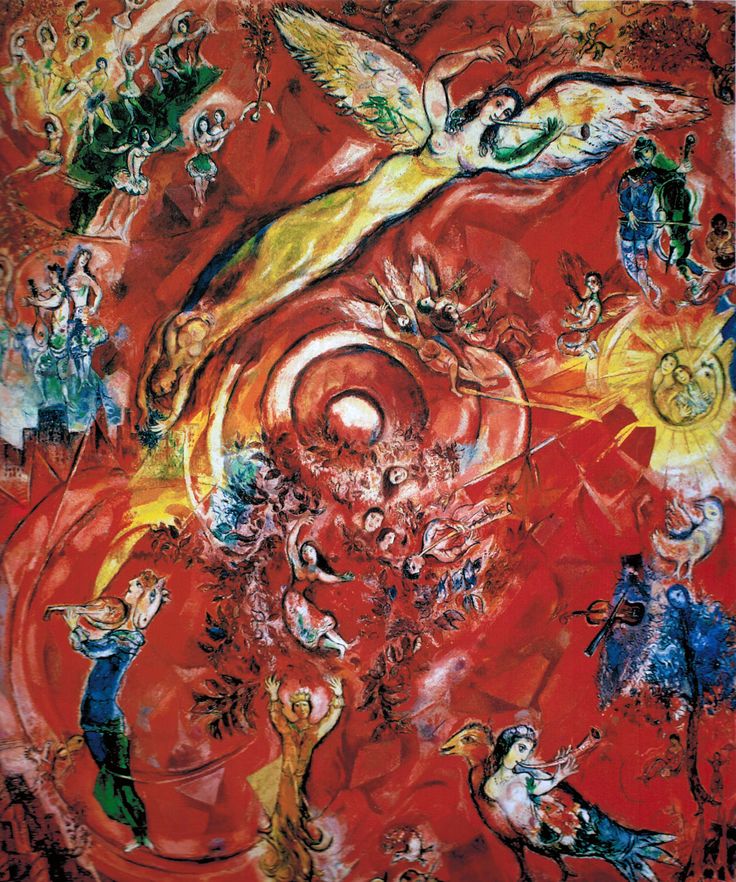
Thursday, October 25, 2018

Are there good reasons to believe that Angels actually exist ?


J.P. Moreland, a Christian philosopher, defends angels and demons without hesitation or embarrassment. “I don’t believe they exist,” he tells me. “I know they exist—and there are two reasons. First, I’m convinced Christianity is true, so angels and demons being real is a system-dependent belief. Second, there are just too many credible, intelligent people who’ve had encounters with angels and demons to dismiss it. … I myself had an encounter with three angels.”


Well….do they ?


As the Enlightenment philosopher John Locke wrote: "That there should be ... intelligent creatures above us ... is probable to me from hence: that in all the visible corporeal world, we see no chasms or gaps."[82] 

Hence F.C. Copleston argues:

We can discern the ascending order or ranks of forms from the forms of inorganic substances, through vegetative forms, the irrational sensitive forms of animals; the rational soul of man, to the infinite ... God: but there is a gap in the hierarchy. The rational soul of man is created, finite and embodied, while God is uncreated, infinite and pure spirit; it is only reasonable, then, to suppose that between the human soul and God there are finite and created spiritual forms which are without body.[83]


There is a Scholastic maxim that “The perfection of the cause is reflected in the perfection of the effect.” 

“Perfection,” in scholastic terminology, refers to actuality, to the extent to which a thing manifests itself fully. One of the logical reasons for believing in separated intelligences is that because God is perfect (fully actual), His creation will manifest perfection as well, in the sense of a full actual range of creatures. He would not leave gaps in His Chain of Being. This is the logical Scholastic argument for the existence of separated intelligences: They complete the Great Chain of Being, and their non-existence would be inconsistent with God’s perfection. 

Before you dismiss this line of reasoning, keep in mind that it is used regularly in natural science. The most dramatic example is Paul Dirac’s prediction of the existence of anti-matter (positrons) based on solutions to equations in quantum mechanics. He saw that the equations worked for electrons with positive as well as negative charge, and he predicted their existence based on his inference to completeness of nature inherent to his equations. Shortly thereafter, positrons were empirically discovered. Such predictions based on the “perfection” of nature are routine in science. Black holes, the Big Bang, and gravity waves were all predicted (before there was empirical evidence of their existence) by extrapolating from equations and presuming the “perfection” — the full actuality — of nature. This is the same reasoning Scholastic philosophers used to infer the existence of separated intelligences.


Michael Egnor points out “Millions of materialists believe that our universe came from nothing for no reason, that essentially infinite numbers of universes are actualized continuously by quantum processes, that upwards of twenty or so invisible spatial dimensions are rolled up in infinitesimal vibrating strings that form the fabric of the cosmos, that cats can be simultaneously dead and alive, and that any moment now we will be saved or damned by benevolent or malicious space aliens (benevolent and malicious aliens are, of course, merely the angels and demons of materialism — except that, unlike separated intelligences, there’s no evidence for aliens whatsoever).


Even more bizarre is the belief by materialists that life itself — the genetic code, the intricate nanotechnology in cells, and the elegant physiology of complex organisms — evolved by natural selection, without any intelligent agency. I point out that there is immeasurably more evidence for separated intelligences than there is for the origin of species by random mutation and natural selection, which has never been videotaped, or seen, by anyone.

What is the evidence for these materialist fables — multiverses and aliens and live-dead cats? There is not a single witness, nothing but presuppositions and highly circumstantial evidence at best.

 These materialist fables are a lot crazier than witnesses’ reports of experiences with separated intelligences.”


Agnostic Robert Lawrence Kuhn muses: "As I see it, a starting fact is that, yes indeed, most human beings believe in angels and demons. Across diverse cultures, nonphysical beings, in great numbers and variety, fly freely in collective myth and individual imaginations. How to explain such robust, broad-based belief?"[54]

As psychiatrist Richard Gallagher observes:


anthropologists agree that nearly all cultures have believed in spirits, and the vast majority of societies (including our own) have recorded dramatic stories of spirit possession. Despite varying interpretations, multiple depictions of the same phenomena in astonishingly consistent ways offer cumulative evidence of their credibility.[55]

As Joshua Hoffman and Gary S. Rosenkrantz affirm:
if entities of a certain kind belong to folk ontology [the ontological presumptions of our common-sense worldview], then there is prima facie presumption in favour of their reality ... Those who deny their existence assume the burden of proof.[56]

Despite their religious differences, Christian, Jewish, Muslim, Taoist, Zoroastrian, Buddhist, Pagan and New Age believers all recognize the existence of finite supernatural agents. 


Professor Stafford Betty reports that:

In the West, several prominent psychologists have opened their minds to the possibility of 'demonic' oppression, gone public with their evidence, and participated in exorcisms.
we must allow the data to challenge our worldview

Moreover, Betty states: "there is mounting evidence today that evil spirits do oppress and occasionally even possess" people. 

William P. Wilson, Professor Emeritus of Psychiatry at Duke University Medical Centre, "regards as purely psychological many problems popularly attributed to demons today, but insists that there are real cases, including some that he has encountered, of actual spirits."[5] 

Anthropologist Alan R. Tippett writes that: "When one has eliminated the spurious and psychopathological cases one is still left with a considerable residue of material which appears to be genuine possession."[6] 

Anthropologist Raymond Firth acknowledges that, despite approaching the subject of spirit possession from a very different standpoint than Christian missionaries, social anthropologists from the Western world:

Have been faced in the field by dramatic changes of personality in men or women they were studying ... speaking with strange voices, assumption of a different identity, purporting to be a spirit not a human being, giving commands or foretelling the future in a new authoritative way. Sometimes it has been hard for the anthropologist to persuade himself that it is really the same person as before whom he is watching or confronting, so marked is the personality change.[7]


Contemporary experience of the angelic

Hope Price reports that "hundreds, possibly thousands, of men and women living today in Britain are quite certain they have seen angels."[99] 

In 1993 Time magazine reported that 13% of Americans claimed to have actually seen or otherwise sensed the presence of an angel.[100] Is it likely that all of these people are either lying or deluded? If not, then it is likely that angels exist. 

Having written her PhD thesis on angel experiences, agnostic Emma Heathcote-James reports that 

"people from all cultures, backgrounds and faiths report fundamentally the same types of experience [with angels]... agnostics and atheists have the same kinds of experiences as believers in orthodox religions."[106] 

Self-described atheists and agnostics comprised some 10% of the reported angelic experiences in Heathcote-James' study. 

She admits: "psychological and medical theories have not provided answers that could explain away every experience I have investigated."[107] 

As Peter Kreeft argues, there are only two groups of people who would disagree with the conclusion that some reported experiences of angels are true: "(1) the materialists, who claim to know that there are no spirits and thus believe no angel stories, and (2) people who even believe the National Enquirer and thus believe all angel stories."[108]


"I know three African priests who are immensely educated and sophisticated scholars (linguists, philosophers, and historians all) and who are also unshakably convinced that miracles, magic, and spiritual warfare are manifestly real aspects of daily life, of which they themselves have had direct and incontrovertible experience on a number of occasions.

All three are, of course, creatures of their cultures, but I am not disposed to believe that their cultures are somehow more primitive or unreasoning than ours. It is true they come from nations that enjoy nothing like our economic and technological advantages; but, since these advantages are as likely to distract us from reality as to grant us any special insight into it, that fact scarcely rises to the level of irrelevance.

Truth be told, there is no remotely plausible reason why the convictions and experiences of an African polyglot and philosopher, whose pastoral and social labors oblige him to be engaged immediately in the concrete realities of hundreds of lives, should command less rational assent from us than the small, unproven, doctrinaire certitudes of persons who spend their lives in supermarkets and before television screens and immured in the sterile, hallucinatory seclusion of their private studies."

-David Bentley Hart


Tuesday, October 23, 2018

The Cosmic Bodies of Angels


"Falling Star" by Witold Pruszkowski; Poland, 1884


"In the universal hierarchy of creation, our spatio-temporal universe—the Cosmos—is the last universe. It is basically nothing but an oblique prolongation of the hierarchy of angelic universes. For each angel constitutes by himself a universe infinitely more perfect than the ensemble of beings that compose our own.... If, per impossibile, the last of the angels could disentegrate, its fragments would constitute a universe infinitely richer than our own."

 - De Koninck

I do believe in angels, multi-dimensional beings, as has been recorded throughout history and testified to by billions, and often wonder at there make up, the possibilty of Plasma life forms, that Quantum Physicist David Bohm wondered at, fascinates me, especially since the physicist Rupert Sheldrake asked why the sun, a self-organising system with a body full of complex electromagnetic patterns, more complex than those in our brains, shouldn’t be conscious, and the association of angels with the stars made of the same material...

of Cuza University, Romania, described in their research paper Minimal Cell System created in Laboratory by Self-Organization how they created plasma spheres in the laboratory that can grow, replicate and communicate - fulfilling most of the traditional requirements for biological cells. 

V N Tsytovich and his colleagues of the Russian Academy of Science showed that particles in plasma can undergo self-organization published in the New Journal of Physics in August 2007 :

" the plasma particles will bead together to form string-like filaments which will then twist into helical strands resembling DNA that are electrically charged and are attracted to each other.

The helical structures undergo changes that are normally associated with biological molecules, such as DNA and proteins...They can, for instance, divide to form copies of the original structure; which then interact to induce changes in their neighbors that evolve into other new structures. 

"These complex, self-organized plasma structures exhibit all the necessary properties to qualify them as candidates for inorganic living matter", says Tsytovich, "they are autonomous, they reproduce and they evolve".


Wired HERE writes about .".. an international team has discovered that under the right conditions, particles of inorganic dust can become organised into helical structures. These structures can then interact with each other in ways that are usually associated with organic compounds and life itself."


Read more HERE


"Can we imagine being stars? And what might the imagination show us of ourselves? One easier answer might be that there are solar beings in the stars, as there are organisms in many other seemingly hostile place. Aristotle expected that there were creatures, even intelligent creatures, living in the lunar fire (De Generatione Animalium 3.76Λ22-24). Stapledon, in one of his lesser known fables, imagined these as flames, born in the sun's troposphere and condemned to live out a cold and intermittent existence on solid earth since the planets were formed....
There is more to be learnt, perhaps, from an older synthesis: the stars are visible gods, and perhaps we too may join them in their felicity."

--Stephen RL Clark, Can We Believe in People?: Human Significance in an Interconnected Cosmos


I recall the philosopher Irish Murdoch making this observation:

“…Captain Cook’s ship (we are told) did not frighten the natives because they could not conceptualise it, that is see it. Possibly we are surrounded by extra-galactic visitors (or angels) to whom we are similarly blind.


But the limits of my language which are the limits of my world fade away on every side into areas of fighting for concepts, for understanding, for expression, for control…

Everyone, every moral being, that is every human being, is involved in this fight, it is not reserved for philosophers, artists and scientists…”

In “Xenology: An Introduction to the Scientific Study of Extraterrestrial Life, Intelligence, and Civilization” (available online), by molecular nanotechnology pioneer Robert Freitas, Clément Vidal analyzed possible metabolisms of living systems based on all four fundamental physical forces in his 2014 book “The beginning and the end: the meaning of life in a cosmological perspective.”

Following astrophysicist Fred Hoyle (in “The Black Cloud” and related nonfiction), Freitas and Vidal speculate on living creatures operating on the principles of plasma physics rather than the usual molecular biochemistry. 

Super-exotic life forms based on non-electromagnetic interactions such as the strong nuclear force (quantum chromodynamics, QCD) could exist in high-energy environments such as neutron stars, and even more exotic life could exist in black holes.


In a 2017 paper titled “Quantum fields as deep learning,” physicist Jae-Weon Lee argues that quantum fields can memorize information and learn. The conclusion states that:

“Our conjecture also implies a surprising possibility that the quantum fields, and hence matter in the universe, can memorize information and even can perform self-learning to some extend like DNN in a way consistent with the Strong Church-Turing thesis.”

Basically, they posit quantum vacuum fields can process information in mind-like ways. 

Caleb Scharf, director of the Astrobiology Center at Columbia University wonders HERE if perhaps the physical laws themselves are alien intelligences….then again, theists might call the physical laws "angelic intelligences"


And David Bentley Hart, in his article, The Spiritual Was More Substantial Than the Material for the Ancients HERE writes,

“Spirit was something subtler but also stronger, more vital, more glorious than the worldly elements of a coarse corruptible body compounded of earthly soul and material flesh. Thus too the word “spirits” was common parlance in late antiquity for all those rational personal agencies and entities who populated the cosmos but who were not bound to vegetal or animal bodies, and so were immune to death: lesser celestial gods, daemons, angels, nefilim, devils, or what have you (what one called the various classes of spirits was a matter of religious vocabulary, not necessarily the basic conceptual shape of their natures). These beings enjoyed a life not limited by the conditions of the lower elements (the στοιχεῖα) or of any of the intrinsically dissoluble combinations thereof.”

Everything else, even spirits, had some kind of body, because all of them were irreducibly local realities. The bodies of spirits may have been at once both more invincible and more mercurial than those with an animal constitution, but they were also, if in a peculiarly exalted sense, still physical. Many thought them to be composed from, say, the aether or the “quintessence” above, the “spiritual” substance that constitutes the celestial regions beyond the moon.

Many also identified that substance with the πνεῦμα — the “wind” or “breath” — that stirs all things, a universal quickening force subtler even than the air it moves. It was generally believed, moreover, that many of these ethereal or spiritual beings were not only embodied, but visible. The stars overhead were thought to be divine or angelic intelligences (as we see reflected in James 1:17 and 2 Peter 2:10–11). And it was a conviction common to a good many pagans and Jews alike that the ultimate destiny of great or especially righteous souls was to be elevated into the heavens to shine as stars (as we see in Daniel 12:3 and Wisdom 3:7, and as may be hinted at in 1 Corinthians 15:30–41).

In the Jewish and Christian belief of the age, in fact, there really appears to have been nothing similar to the fully incorporeal angels of later scholastic tradition — certainly nothing like the angels of Thomism, for example, who are pure form devoid of prime matter and therefore each its own unique species.

In fact, it was a central tenet of the most influential angelology of the age, derived as it was from the Noachic books of the intertestamental period, that angels had actually sired children — the monstrous nefilim — on human women. It is even arguable that no school of pagan thought, early or late, perhaps not even Platonism, really had a perfectly clear concept of anysubstance without extension. For Plotinus, for instance, “soul” was “incorporeal,” but not in the way we might assume; while the soul in Plotinus’s system was not susceptible of “material” magnitude, and hence could contain all forms without spatial extension (Enneads 2.4.11), it was still “incorporeal” only in the sense that it possessed so subtle a nature that it could wholly permeate material bodies without displacing their discrete material constituents (Enneads 4.7.82)

“So it has also been written, ‘The first man Adam came to be a living soul,’ and the last Adam a life-making spirit . . . The first man out of the earth, earthly; the second man out of heaven. As the earthly man, so also those who are earthly; and, as the heavenly, so also those who are heavenly; and, just as we have borne the image of the earthly man, we shall also bear the image of the heavenly man.”

This is for Paul nothing less than the transformation of the psychical composite into the spiritual simplex — the metamorphosis of the mortal fleshly body that belongs to soul into the immortal fleshless body that belongs to spirit: ἡμεῖς ἀλλαγησόμεθα. Δεῖ γὰρ τὸ φθαρτὸν τοῦτο ἐνδύσασθαι ἀφθαρσίαν καὶ τὸ θνητὸν τοῦτο ἐνδύσασθαι ἀθανασίαν, “We shall be changed. For this perishable thing must clothe itself in imperishability, and this mortal thing must clothe itself in immortality.”

There appears to be many connections with stars, celestial intelligences, and plasma.


Many Christians have likened Angels to the invisible forces of nature, that we, of course, are ignorant of their nature.

Aquinas, following Avicenna, interpreted Aristotle to mean that there were two immaterial substances responsible for the motion of each celestial sphere, a soul that was an integral part of its sphere, and an intelligence that was separate from its sphere. The soul shares the motion of its sphere and causes the sphere to move through its love and desire for the unmoved separate intelligence. 

And Kepler held that the planets were moved both by an external motive power, which he located in the Sun, and a motive soul associated with each planet.


"That world, the world defined by materialist science, is as clear a projection as the world of angels"

- Stephan Clark 


Science, the "laws" of gravity, merely describe various motions, they don't tell us WHAT gravity is - we act as if these laws have agency, and actually cause things to move about.....

Modern man anthroposizes the cosmos far more than ancient man, rocks fall because they "obey" "laws"...as if they read the various statutes and sought to comply....

Richard Feynman said something on the order of, "Men used to believe that the planets moved because each had an angel to push it; men don't believe in angels anymore, but we still don't know why the planets move."

Thursday, October 4, 2018

Does Christianity make EXISTENTIAL sense ?


Many religions recognize man's greatness, but fail to see man's wretchedness, or vice versa, some even claim we have two souls, evil and good, such odd things we are, both animal and rational, some call us gods, some devils, but only Christianity sees man for what he really is; man is both wretched and great, a ruined exiled king - The Christian doctrines of creation and the fall alone seem adequately to explain the paradox - man's greatness could be explained in the fact that man was created in God's image. 

“What sort of freak then is man! How novel, how monstrous, how chaotic, how paradoxical, how prodigious! Judge of all things, feeble earthworm, repository of truth, sink of doubt and error, the glory and refuse of the universe!”

Commenting on Pascal’s above anthropological argument, Peter Kreeft writes, “Man is a living oxymoron: wretched greatness, great wretchedness, rational animal, mortal spirit, thinking reed.”

 “We are a puzzle to ourselves,” Thomas Morris notes. “One of the greatest mysteries is in us....How can one species produce both unspeakable wickedness and nearly inexplicable goodness? How can we be responsible both for the most disgusting squalor and for the most breathtaking beauty? How can grand aspirations and self-destructive impulses, kindness and cruelty, be interwoven in one life? The human enigma cries out for explanation.” 

The dilemma of man, that he is both great and wretched, is easy to document. The gap between animals and man is too great for evolution to adequately explain. No animal species will ever produce a Plato or Aristotle. Yet, the cruelty of man waged against man is unheard of in the animal kingdom. No animal species will ever produce a Hitler or Stalin.

Only Christianity with its doctrine of creation and the fall can adequately explain both aspects of man.

D. G. Preston comments on Pascal’s overall apologetic approach: 

"Pascal the empiricist starts with the data, notably the inexplicable phenomenon of mankind: unquestionably corrupt, subject to inconstancy, boredom, anxiety and selfishness, doing anything in the waking hours to divert the mind from human wretchedness, yet showing the vestiges of inherent greatness in the mind’s realization of this condition. Mankind is also finite, suspended between twin infinities revealed by telescope and microscope, and aware of an inner emptiness which the finite world fails to satisfy. No philosophy makes sense of this. No moral system makes us better or happier. One hypothesis alone, creation in the divine image followed by the fall, explains our predicament and, through a redeemer and mediator with God, offers to restore our rightful state."

Douglas Groothuis explains, “Pascal claims that merely human philosophies are unable to tell us who we are because they fall into two equal and opposite errors concerning humanity. They either exalt greatness at the expense of wretchedness or they exalt wretchedness at the expense of greatness.”


Kallistos Ware writer the following :

"We find a second “pointer” within ourselves. Why, distinct from my desire for pleasure and dislike of pain, do I have within myself a feeling of duty and moral obligation, a sense of right and wrong, a conscience? And this conscience does not simply tell me to obey standards taught to me by others; it is personal. Why, furthermore, placed as I am within time and space, do I find within myself what St Nicolas Cabasilas calls an “infinite thirst” or thirst for what is infinite? Who am I? What am I?

The answer to these questions is far from obvious. The boundaries of the human person are extremely wide; each of us knows very little about his true and deep self. Through our faculties of perception, outward and inward, through our memory and through the power of the unconscious, we range widely over space, we stretch backward and forward in time, and we reach out beyond space and time into eternity. 

“Within the heart are unfathomable depths”, affirm The Homilies of St Macarius. “It is but a small vessel: and yet dragons and lions are there, and there poisonous creatures and all the treasures of wickedness; rough, uneven paths are there, and gaping chasms. There likewise is God, there are the angels, there life and the Kingdom, there light and the Apostles, the heavenly cities and the treasures of grace: all things are there.”

In this manner we have, each within our own heart, a second “pointer.” What is the meaning of my conscience? What is the explanation for my sense of the infinite? Within myself there is something which continually makes me look beyond myself. Within myself I bear a source of wonder, a source of constant self-transcendence."

What is this mysterious creature man who feels these unexplainable needs ?

1 the need for cosmic security
2 the need for meaning
3 the need to feel loved
4 the need to love
5 the need for awe
6 the need to delight in goodness
7 the need to live beyond the grave without the anxieties that currently affect us
8 the need to be forgiven
9 the need for justice and fairness
10 the need to be present with our loved ones


Humans have certain “existential” needs. N. T. Wright lists four such needs: “the longing for justice, the quest for spirituality, the hunger for relationships, and the delight in beauty.”

 Clifford Williams lists thirteen: 

“We need cosmic security. We need to know that we will live beyond the grave in a state that is free from the defects of this life, a state that is full of goodness and justice. We need a more expansive life, one in which we love and are loved. We need meaning, and we need to know that we are forgiven for going astray. We also need to experience awe, to delight in goodness and to be present with those we love.”
Faith in God satisfies these needs.
Therefore, faith in God is justified.

Williams states that this argument is not the same as an evidential argument: 

"A person who is convinced of an existential argument says, 'I believe because I am satisfied when I do.' A person who is convinced of an evidential argument says, 'I believe because there is a good reason to do so.'"

He also states that the argument is different from C. S. Lewis’s argument from desire, which argues that there is an explanation of the source of the existential needs: “If I find in myself a desire which no experience in this world can satisfy, the most probable explanation is that I was made for another world.”

Christianity also makes sense of the following profound human experiences :

1) "Experience of cosmic wonder"
2) "Experience of purposive order"
3) "Sense of being morally accountable"
4) "Sense of human dignity and worth"
5) "The Longing for transcendent joy"


Finally, the very life of Christ is the archetype of the human experience - betrayed by friends and religious elders, abandoned at his very lowest, constantly misunderstood, alienated, homeless, seeking only to love and nailed to a bloody cross without mercy as a reward....isn't this how life is ?  


Can you actually HATE God ?


There’s an old Catholic saying that goes, “If you’ve never cursed God, you’ve never known Him.”

But is that God, or only an idea of God, that you hate ?
I’m not sure, the Prophet’s often felt cursed by God and let Him know it, and perhaps this wrestling with God is part of what makes us human.

After all, if God created all this mess, isn’t He ultimately responsible ?

I’ve heard the apologetics : perhaps God isn’t all-powerful, or at least not how we think of power, perhaps God had to divest Himself of His power, maybe God has a morally sufficient reason to allow suffering, maybe there’s an entire level of reality and conflict we can scarcely conceive of, perhaps we ourselves WANT this reality - one where we can act against the Tao of the Universe to do what we wish, but that therefore brings death and decay into the universe, perhaps it’s up to us to sanctify the world with God’s grace, and only our refusal to bring creation to God causes the world to hurl into chaos, how can our small minds comprehend these mysteries, let alone pass judgement on them ? And on and on.

I can only say that
Christ is who I worship. I worship the God who hates death, who is scandalized by evil, and who weeps at injustice. Christ came to save us from all that. God Himself became man, died for us, grafting human nature onto Divine nature to raise us up out of this evil world.

This is the inexplicable power that, however rare, we come across when confronted by real acts of love and charity. So often I’ve been about to tilt into the abyss, and cried out in prayer, and a force wells up and rescues me from plunging into utter despair.  We all know this power exists.

We know God loves us, against all the evidence of evil, because He sent a light into this dark world to illuminate His true nature - that He is love. We can know that God is love by participating in His life in the Eucharist and liturgical rituals, shaped and oriented toward this revelation until it lives inside us.

We can trust the experiences of the saints, who have committed their lives over to this Mysterious power. Their lives, abundant in fruitful works of great love, all testify to these truths.

The rest is intellectual theologizing. Why does God allow suffering? What happened in the Fall? No one knows. 

There are stories that point, I think, to something true - that we live in some kind of metaphysical catastrophe, in Genesis with its two creation versions - the first being perfect with no death, that are trying to tell us something, that this world with death was never God’s intention, and the author of evil lies in another Power, an enemy of God.

Christianity is not a philosophy, not a series of propositions to affirm or deny, it is a Way of life. Truth is a person. Christianity is participating in the life of God, getting to know Him, being fitted for a new existence after death to live with Him.

What we do know is this power can rescue us from death, and it lays out a way, the Cross, to accept the senseless affliction of existence, deny ourselves, and put ourselves under judgement.

This is the power I worship - love in Christ, foolishly, against realty, even against God Himself if He refuses to give back my loved ones and wash them of all affliction. I stand by the power that condemns all death and suffering, and if I were to find God is part of those powers then I would condemn Him too.

God is utterly transcendent, every concept of Him inadequate and false. We know very little of just what the hell is going on in this universe. 


 I end with a few passages by possibly the greatest living theologian, David Bentley Hart :

“There lies in this expectation (of the resurrection), necessarily, a kind of ultimate defiance of “reality,” and even of God if he will not raise the dead… "

"If, say, the Jewish child who choked to death in a cloud of Zyklon-B is not restored to a life that is more than life, is not given joy and eternity in his own person, is not given back, then why should we care what private intimations of transcendence Jesus might have experienced on the cross? And why should we want to find ourselves embraced in the arms of the demiurge whose world thrives in the death of children?"

“Ours is, after all, a religion of salvation; our faith is in a God who has come to rescue His creation from the absurdity of sin and the emptiness of death, and so we are permitted to hate these things with a perfect hatred. 


As for comfort, when we seek it, I can imagine none greater than the happy knowledge that when I see the death of a child I do not see the face of God, but the face of His enemy.”